Thursday, 11 July 2019
I saw my surgeon..... surgery date set!
Yesterday I travelled all the way to Wolverhampton NHS Trust New Cross Hospital to meet Mr Andy Garnham who is a vascular surgeon. He was very friendly, briefly ran through Rob's findings from Bristol and conducted a short physical examination checking my pulse or lack of subclavian pulse with my arms in different positions and using a stethescope. He said that he would be doing a scalenectomy and removing my first rib. Despite the findings from the radiology assessment that injecting pec minor gave me further relief, he thinks that because of my hypermobility and EDS that to remove pec minor would create a lack of stablility for my shoulder as it is a muscle working very hard where other muscles aren't doing enough work. The same old story in my case - some muscles do far too much leading to pain, whereas others are inactive. However, if we don't get a good enough result from the surgery by just removing the scalenes, he would consider removing pec minor at a later date. We went through risks - death from General Anaesthetic - GA, blood clots, the fact I might need a chest drain. I then signed my consent form. I explained that my pain management consultant was coming up with a plan for pain relief post-operatively and that I might need a longer stay in hospital given my EDS. I also gave mention I might need ITU or HDU after surgery. Mr Garnham said that he would also give me some local anaesthetic in the ribs once he'd completed surgery, and botox into pec minor which might last a few months. He also said I might want a drug such as pre-gabalin to help with nerve pain post-op. I also negotiated to come in the day before surgery due to travelling, but said that I wanted to be in hospital and settle in, rather than a local hospital as I would be coming alone with no support. He agreed to this. We managed to do my MRSA screen and take some pre-op assessment bloods, and Mr Garnham also wanted an x-ray of the top part of my rib cage to have a closer look at the first two ribs. Anyway, the date was also set and is going to be Thursday 12th September for surgery, and I will come into hospital on Wednesday 11th September. Everyone that I met at the hospital was extremely kind and friendly and I left feeling very happy and relieved that this is now going to happen after all the previous disbelief that I have experienced, it was nice not to have to fight my consultant, or convince them there was a problem, because he found it clearly and said this was work that was right up his street having done this type of surgery for 19 years. I left Wolverhampton feeing extremely happy and relieved, and although I have another two months to wait, knowing that there will be a surgery at the end of it will help me through it. However I am under no illusions, as it is very painful surgery and will take many weeks/months to entirely recover.

Sunday, 30 June 2019
Appointment with Surgeon
In the end it came to be a toss up between two surgeons. However one was not taking on any NHS patients, so the other one became the obvious candidate, but I am not unhappy about that, and have an out-patient appointment with Mr Garnham in New Cross Hospital, Wolverhampton NHS Trust. It may not be the most convenient for me - it certainly caused some reactions from my GP secretaries doing the referal - but it is what it is and Mr Garnham's secretary is lovely, and he is a General and Vascular surgeon. Given how my arms are feeling today, I hope that things will happen soon. Early August for surgery would be ideal.
Sunday, 16 June 2019
What next?
The day after the guided blocks I had to continue to complete a pain diary, although the blocks didn't really hold for the sake of the 3 minute test, I never managed that again, and by Wednesday my pain was back to full pelt and strength. I sent back my diary and comments to Rob.
On Friday I received a very unexpected email from him saying that because I had responded so well to the blocks [I hadn't really], that I could be a candidate for botox and a physiotherapy plan. However this would be very costly, and was not something that I had been expected, neither was it discussed at my long appointment in mid-May. I was rather cross, because it was not an excellent result, and I had expected to be having surgery, as per my consultation in May.
Later in the day Rob came back to me with two options for surgery, one being at Oxford with a surgeon who had recently been ill and there were rumours online he was not taking on new patients and probably had a long waiting list. Then there was a surgeon in Wolverhampton who would have had a much shorter wait. Since it is the weekend, I am going to ring both hospitals on Monday and see how the land lies.
I can only really see surgery as the long-term way out of this, whilst I have also made contact with my pain management consultant about attempting further nerve blocks on the NHS.
Tuesday, 11 June 2019
Scanning tests with Injections to show TOS
Yesterday I travelled to Bristol again to see Dr Bradley who is an expert radiologist in TOS (among other things). He was able to show that my scalene muscles are very stuck together - there should be a gap of at least 8mm between them and in me it was much less on both sides. On scanning he was also able to show that I had a subluxging ulnal nerve at the elbow. This means that the ulnal nerve is slipping out of place at the elbow on both sides [bilaterally]. Rob had also found this on examination. Dr Bradley was able to show me and his assistants very clearly on scan, and I could certainly feel it - in fact it is sore on the left side. Dr Bradley said he would be mentioning this in his report, but that he couldn't tell if the surgeon would want to repair this now, or at a later date.
When I came in to see Dr Bradley he actually started by asking me to do the 3 minute test with my arms up - see images below after he had performed injections [my carer took images this morning]. When I first did the test I could only manage 12 seconds before symptoms became too much. After scanning my wrists, elbows, scalenes and pec minor muscles he performed injections involving lidocaine [local anaesthetic] and I am not sure what else [possibly botox] which he performed to the scalenes on both sides, this already reduced my pain with my arms up. He them added the pec minor injections and that improved my pain at rest as well. The assitant radiologist was lovely and they kept checking I was OK, although the injections didn't hurt nearly as much as I had feared. I then repeated the 3 minutes test, managing 3 minutes with complete ease. In fact I looked a different person. I looked much better than I had when I walked into the room. I had a difficult journey, and then there was a long wait to see Dr Bradley, and dreadful traffic and heavy rain meant in the end I only just managed to get my train home with ease. I also tried playing my recorder for about 25 minutes, and although there were still finger agility issues, there was no pain.
Once home, I had to repeat the 3 minute test and still had no problems doing so. I slept well at night without the usual interuptions of partly numb arms or tingling, pain, pins and needles. In the morning, I repeated the 3 minute test, but the results had massively declined with 7 and 8 seconds respectively on the left arm [we repeated the test to be sure] and I managed 36 seconsds on the right arm. I had some pain already in the left arm both in testing and at rest, but the right arm is OK at rest. As soon as I peformed the test though to the left, I had symptoms. Here are some pictures of the 3 minute test. I have to repeat the test twice more today and technically tomorrow morning, although this may not be worth it if the results are as bad with the tests later today. The tests show for sure that providing diagnostic medication to the area resolves the problem, meaning that technically surgery should work. I need to keep taking any notes of changes and then will email Rob will all my results. The plasters you can see there are 4 (one is hidden to the right) are where I had the injections, the higher ones are the scalenes muscles and the lower ones pec minor.


After repeating the test again, symptoms were again at 7/8 seconds on the left hand and about 12 on the right hand.
Thursday, 6 June 2019
Taking part in research into Neuropathic pain and Thoracic Outlet Syndrome [NTOS]
Once I had received my confirmed diagnosis of Neurological Thoracic Outlet Syndrome -NTOS, I was invited to take part in some research at the John Radcliffe Hospital in Oxford into neuropathic pain including NTOS. I have alway been interested in helping out with medical research where and when I can, so I was more than happy to help. As an aside I have been involved into research for Type 1 [insulin dependent] Diabetes since 1986 when my sister was diagnosed. It just so happened that the nurse leading this ongoing longitudinal study into diabetes was also based at the John Radcliffe hospital, so I arranged to meet with her so she could take blood at the same time as I was helping out with the other study. It all worked out very well as the nurse took blood for both studies at the same time resulting in the need for one blood test only :)
In advance of taking part in the neuropathic pain /NTOS study I had an initial discussion with the research Fellow, Annina Schmidt who explained what would happen on the afternoon of testing and to send me some questionnaires to complete in advance. She also requested as many letters and test results in connection with my NTOS diagnosis as possible, and these were kindly sent on by Rob Patterson from the Cherington Practice where I had recently attended for full TOS diagnosis [see earlier blog entry]. I then had to go through a form signing and giving my consent to take part in the test.
It had been an extremely long time since I had been to the John Radcliffe Hospital in Oxford, which has quadrupled in size since I had last been there in the late 1990s [as I used to live in Oxfordshire]. I was very impressed with the panoramic view of Oxford from the upstairs of the West Wing where I met Annina who was lovely and so my afternoon of testing begun.
Annina begun by going through and getting me to sign two copies of consent forms and explained the overall plan for the afternoon. I went through a range of different physical tests - some were familar and had been performed on me before as part of my TOS diagnosis a few weeks earlier with Rob. Annina also commented on my very cold hands as Rob had done. There were some sensory tests conducted involving my little finger being strapped to a machine that would go either hot or cold.With my other hand I had to push a green button when I felt the cold as much as I could cope with or the heat. There were other sensory tests to the same finger and also to my forearm - the heat and cold test plus some 'hair-type' or hair looking points that were applied to my finger. I had my eyes shut and had to say whether or not I felt the point, and then whether it was sharp or blunt. This was also repeated to my forearm. None of it was too uncomfortable or painful. I also knew that I could stop at any point if anything did cause me pain or discomfort. There was also some similar testing to my leg - I think for comparison.
Another test I had involved having a skin biopsy. For this I was given a local anaesthetic injection to the bottom third of my little finger. Initially this stung a tiny bit but then my finger felt completely numb and all fat like a sausage. The skin biopsy is about half the size of the round of the end of a pencil. It bled a little, but this was all patched up with steristrips and a plaster, but was totally painless. I had to wear plasters on it for a few days, but as I write this almost a week later, the area is tiny and scabbing over, so I expect it to be totally gone in a few more days.
Finally, I had a blood test - this was conducted by the diabetic research nurse who took blood for her study as well as for Annina - but this was because I was unsually doing another study at the same time! It didn't hurt, and the main thing I felt was glad that I could take part and help in important medical research for as it happened - two different projects.
Annina also does nerve conduction studies as part of her testing, but I was given excemption from these as I had been through them twice elsewhere and had a bad experience, but these would be fine for most people.
Although there was no payment for this study, travel expenses were reimbursed, and for me, it was the taking part in helping with medical research that was far more important than money. I was delighted to help in such important work. There is very little research into neuropathic pain - particularly in TOS, so anything that helps is important. If you feel able to take part in the neuropathic pain/TOS study then contact the researchers at the Nuffield Department of Clinical Neurosciences directly. The researcher I saw was Annina Schmid. Finally, I would like to add how lovely and reassuring Annina is. She totally put me at ease throughout the afternoon. The whole testing time was approx 3 hours.
Monday, 27 May 2019
Rib Joke

Part of the surgery for TOS can mean removal of the cervical rib, in those who have this extra rib and/or removal of the first rib. This joke tickled me because any future x-rays I have following my surgery may show a change in the number or ribs I have!
Sleep, fatigue, hypermobile Ehlers-Danlos Syndrome and TOS.
Getting sleep can be a challenge with TOS - that is partly because if you end up lying on the side(s) that are affected you can wake up to a numb arm, a cold arm, or perfuse pins and needles or a combination of all three. I should imagine this is far worse and more or a concern in those with Venous TOS or VTOS or Arterial TOS or ATOS. I do have aspects of ATOS, and so my arteries are responding to the nerves that contract the subclavian artery. I am fortunate in that I do not or have not had blood clots which can be very worrying. Fortunately this only happens in about 1 or 2% of the overall patient cohort.
I usually sleep on my back most of the night, but if I end up on my side a dead arm eventually wakes me enough to move or turn over. I confess to sleeping with a heat pad for my back - even in summer. This is for pain management. As I am often cold even still having double duvets in May you can tell how bad my circulation is, - that is partly due to having Postural Orthostatic Tachycardia Syndrome PoTS and Ehlers-Danlos Syndrome (EDS). I am also hypermobile - having more flexibility in my joints than those with 'normal' joints. My hypermobile EDS hEDS causes pain as well - and in fact 50% of the patients Rob Patterson, physiotherapist and Orthopaedic Consultant in Bristol sees have hEDS and TOS together [as comorbid conditions]. All these conditions including PoTS seem to have overlap symptoms.
Fatigue is another symptom that overlaps with hEDS, NTOS and PoTS. I have tried to explain fatigue a number of times in the books and papers that I have written about hypermobility and EDS in the past. It is not just being tired. It is a feeling of being completely wiped out, like all the battery you have has gone flat. Sometimes it also affects my cognitive function and I can't spell words, or even speak sensible sentences. Fatigue can sometimes be so overwhelming that you are too tired to sleep. It can last for hours or even days. I have Fibromyalgia as well [just for good measure] and that is another condition where fatigue is a problem. There is a term 'Fibrofog' which explains the cognitive dysfunction that accompanies fatigue. I often need 8-12 hours sleep, although I never ever sleep through the night.
Autonomic dysfunction is a large part of hEDS, PoTS and Fibromyalgia - and to an extent it must be the case with TOS as well because of the temperature changes that patients seem to experience. My hands are always like blocks of ice. The Autonomic Nervous System or ANS is responsible for controlling things like heart rate, blood pressure and temperature. In patients with these conditions it is very out of balance which results in feeling like you have flu and this fatigue I was talking about.
Pacing of activities can help to manage fatigue - but there is no guarantee that you might be caught off-guard with a fatigue attack even if you've had a quiet day - sometimes it was to do with sometime you did days before. If I have a very busy day - going out all day or seeing friends, I usually need a quiet day the next day. Two busy days in a row usually result in at least two more where I need my bed.
Clumsiness or dyspraxia, now known as Developmental Coordination Disorder - DCD (another acronym) - seems to show itself in later stages of TOS - at least being clumsy does. I have lost my fine motor control for things like 'eating peas' - I need a spoon now. I can't open medicine bottles or bleach cleaning products. There is no way I could manage to sew anything. As I have mentioned in earlier blog entries I have stopped being able to play my recorder. Even typing is becoming harder.
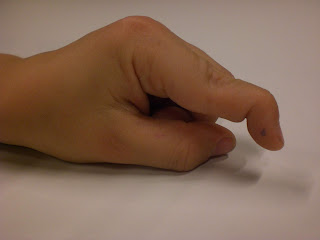
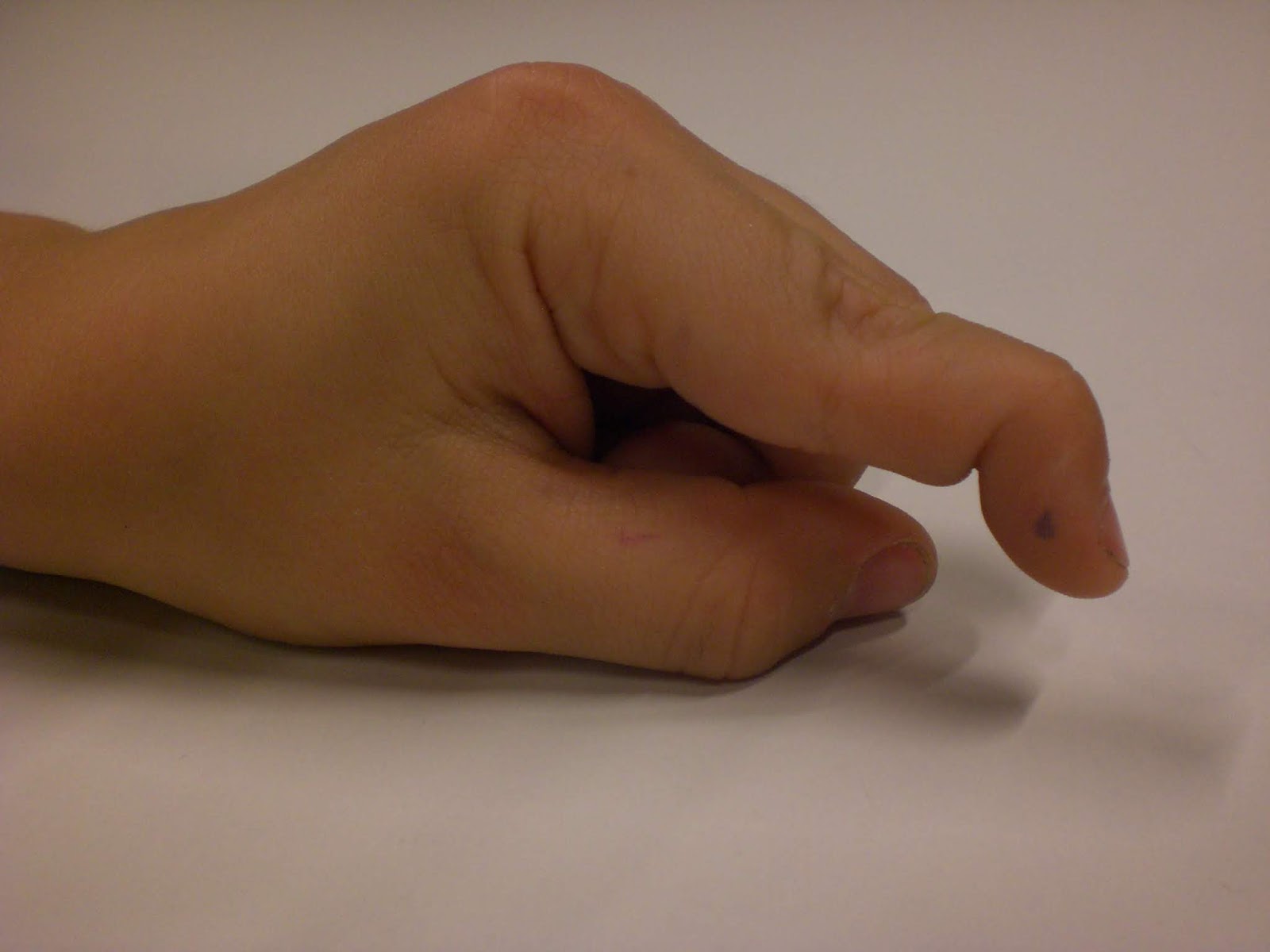
Maybe one day I will write a longer article about TOS - in the meantime here are some pictures of hypermobile joints that may affect TOS patients, and below a link to my books.


 https://www.bowenworks.org/books-research.phphttps://onlinelibrary.wiley.com/doi/full/10.1002/ajmg.c.31428
I usually sleep on my back most of the night, but if I end up on my side a dead arm eventually wakes me enough to move or turn over. I confess to sleeping with a heat pad for my back - even in summer. This is for pain management. As I am often cold even still having double duvets in May you can tell how bad my circulation is, - that is partly due to having Postural Orthostatic Tachycardia Syndrome PoTS and Ehlers-Danlos Syndrome (EDS). I am also hypermobile - having more flexibility in my joints than those with 'normal' joints. My hypermobile EDS hEDS causes pain as well - and in fact 50% of the patients Rob Patterson, physiotherapist and Orthopaedic Consultant in Bristol sees have hEDS and TOS together [as comorbid conditions]. All these conditions including PoTS seem to have overlap symptoms.
Fatigue is another symptom that overlaps with hEDS, NTOS and PoTS. I have tried to explain fatigue a number of times in the books and papers that I have written about hypermobility and EDS in the past. It is not just being tired. It is a feeling of being completely wiped out, like all the battery you have has gone flat. Sometimes it also affects my cognitive function and I can't spell words, or even speak sensible sentences. Fatigue can sometimes be so overwhelming that you are too tired to sleep. It can last for hours or even days. I have Fibromyalgia as well [just for good measure] and that is another condition where fatigue is a problem. There is a term 'Fibrofog' which explains the cognitive dysfunction that accompanies fatigue. I often need 8-12 hours sleep, although I never ever sleep through the night.
Autonomic dysfunction is a large part of hEDS, PoTS and Fibromyalgia - and to an extent it must be the case with TOS as well because of the temperature changes that patients seem to experience. My hands are always like blocks of ice. The Autonomic Nervous System or ANS is responsible for controlling things like heart rate, blood pressure and temperature. In patients with these conditions it is very out of balance which results in feeling like you have flu and this fatigue I was talking about.
Pacing of activities can help to manage fatigue - but there is no guarantee that you might be caught off-guard with a fatigue attack even if you've had a quiet day - sometimes it was to do with sometime you did days before. If I have a very busy day - going out all day or seeing friends, I usually need a quiet day the next day. Two busy days in a row usually result in at least two more where I need my bed.
Clumsiness or dyspraxia, now known as Developmental Coordination Disorder - DCD (another acronym) - seems to show itself in later stages of TOS - at least being clumsy does. I have lost my fine motor control for things like 'eating peas' - I need a spoon now. I can't open medicine bottles or bleach cleaning products. There is no way I could manage to sew anything. As I have mentioned in earlier blog entries I have stopped being able to play my recorder. Even typing is becoming harder.
Maybe one day I will write a longer article about TOS - in the meantime here are some pictures of hypermobile joints that may affect TOS patients, and below a link to my books.


Subscribe to:
Posts (Atom)