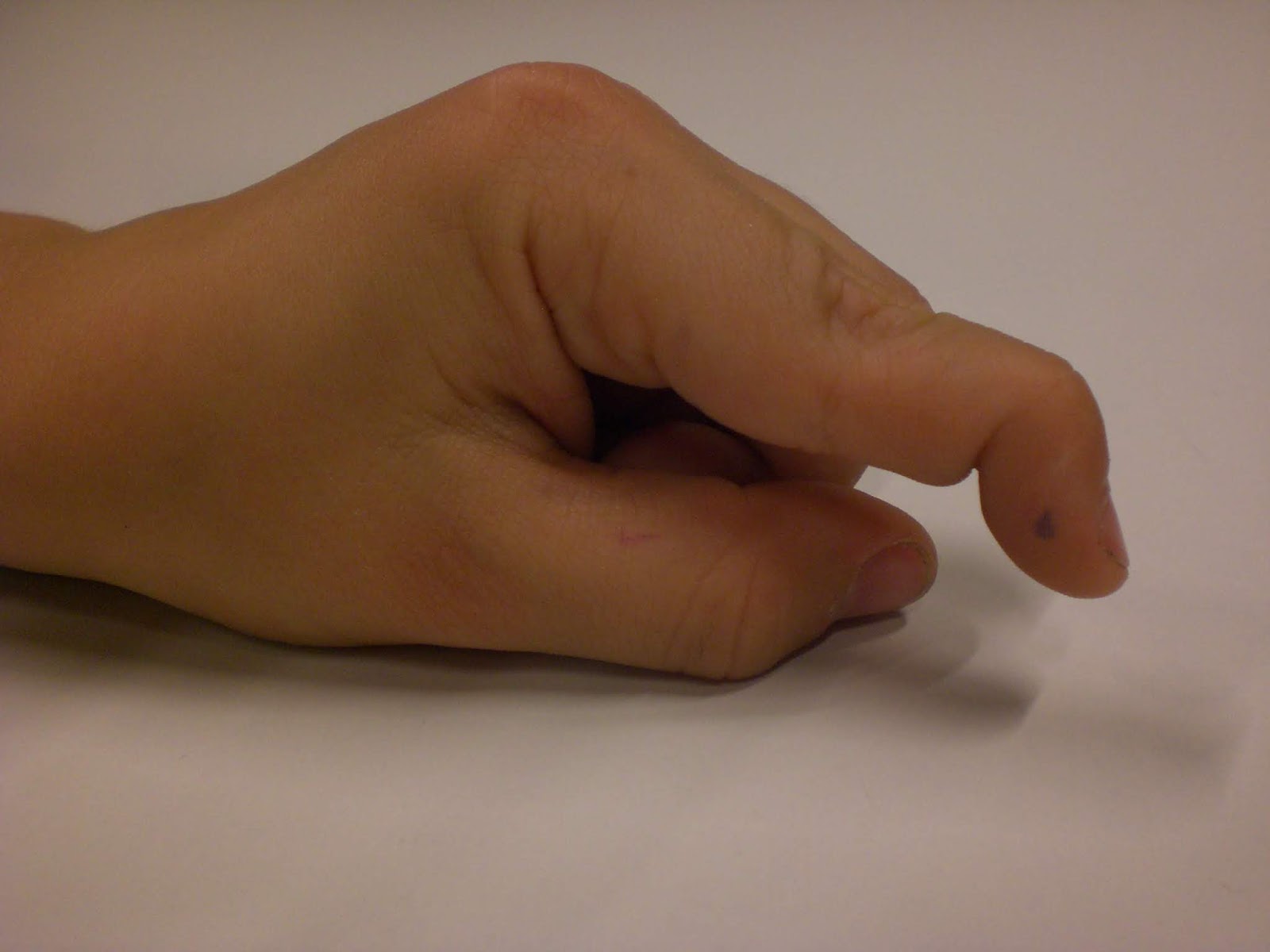
Part of the surgery for TOS can mean removal of the cervical rib, in those who have this extra rib and/or removal of the first rib. This joke tickled me because any future x-rays I have following my surgery may show a change in the number or ribs I have!
Monday, 27 May 2019
Sleep, fatigue, hypermobile Ehlers-Danlos Syndrome and TOS.
Getting sleep can be a challenge with TOS - that is partly because if you end up lying on the side(s) that are affected you can wake up to a numb arm, a cold arm, or perfuse pins and needles or a combination of all three. I should imagine this is far worse and more or a concern in those with Venous TOS or VTOS or Arterial TOS or ATOS. I do have aspects of ATOS, and so my arteries are responding to the nerves that contract the subclavian artery. I am fortunate in that I do not or have not had blood clots which can be very worrying. Fortunately this only happens in about 1 or 2% of the overall patient cohort.
I usually sleep on my back most of the night, but if I end up on my side a dead arm eventually wakes me enough to move or turn over. I confess to sleeping with a heat pad for my back - even in summer. This is for pain management. As I am often cold even still having double duvets in May you can tell how bad my circulation is, - that is partly due to having Postural Orthostatic Tachycardia Syndrome PoTS and Ehlers-Danlos Syndrome (EDS). I am also hypermobile - having more flexibility in my joints than those with 'normal' joints. My hypermobile EDS hEDS causes pain as well - and in fact 50% of the patients Rob Patterson, physiotherapist and Orthopaedic Consultant in Bristol sees have hEDS and TOS together [as comorbid conditions]. All these conditions including PoTS seem to have overlap symptoms.
Fatigue is another symptom that overlaps with hEDS, NTOS and PoTS. I have tried to explain fatigue a number of times in the books and papers that I have written about hypermobility and EDS in the past. It is not just being tired. It is a feeling of being completely wiped out, like all the battery you have has gone flat. Sometimes it also affects my cognitive function and I can't spell words, or even speak sensible sentences. Fatigue can sometimes be so overwhelming that you are too tired to sleep. It can last for hours or even days. I have Fibromyalgia as well [just for good measure] and that is another condition where fatigue is a problem. There is a term 'Fibrofog' which explains the cognitive dysfunction that accompanies fatigue. I often need 8-12 hours sleep, although I never ever sleep through the night.
Autonomic dysfunction is a large part of hEDS, PoTS and Fibromyalgia - and to an extent it must be the case with TOS as well because of the temperature changes that patients seem to experience. My hands are always like blocks of ice. The Autonomic Nervous System or ANS is responsible for controlling things like heart rate, blood pressure and temperature. In patients with these conditions it is very out of balance which results in feeling like you have flu and this fatigue I was talking about.
Pacing of activities can help to manage fatigue - but there is no guarantee that you might be caught off-guard with a fatigue attack even if you've had a quiet day - sometimes it was to do with sometime you did days before. If I have a very busy day - going out all day or seeing friends, I usually need a quiet day the next day. Two busy days in a row usually result in at least two more where I need my bed.
Clumsiness or dyspraxia, now known as Developmental Coordination Disorder - DCD (another acronym) - seems to show itself in later stages of TOS - at least being clumsy does. I have lost my fine motor control for things like 'eating peas' - I need a spoon now. I can't open medicine bottles or bleach cleaning products. There is no way I could manage to sew anything. As I have mentioned in earlier blog entries I have stopped being able to play my recorder. Even typing is becoming harder.
Maybe one day I will write a longer article about TOS - in the meantime here are some pictures of hypermobile joints that may affect TOS patients, and below a link to my books.
https://www.bowenworks.org/books-research.phphttps://onlinelibrary.wiley.com/doi/full/10.1002/ajmg.c.31428
I usually sleep on my back most of the night, but if I end up on my side a dead arm eventually wakes me enough to move or turn over. I confess to sleeping with a heat pad for my back - even in summer. This is for pain management. As I am often cold even still having double duvets in May you can tell how bad my circulation is, - that is partly due to having Postural Orthostatic Tachycardia Syndrome PoTS and Ehlers-Danlos Syndrome (EDS). I am also hypermobile - having more flexibility in my joints than those with 'normal' joints. My hypermobile EDS hEDS causes pain as well - and in fact 50% of the patients Rob Patterson, physiotherapist and Orthopaedic Consultant in Bristol sees have hEDS and TOS together [as comorbid conditions]. All these conditions including PoTS seem to have overlap symptoms.
Fatigue is another symptom that overlaps with hEDS, NTOS and PoTS. I have tried to explain fatigue a number of times in the books and papers that I have written about hypermobility and EDS in the past. It is not just being tired. It is a feeling of being completely wiped out, like all the battery you have has gone flat. Sometimes it also affects my cognitive function and I can't spell words, or even speak sensible sentences. Fatigue can sometimes be so overwhelming that you are too tired to sleep. It can last for hours or even days. I have Fibromyalgia as well [just for good measure] and that is another condition where fatigue is a problem. There is a term 'Fibrofog' which explains the cognitive dysfunction that accompanies fatigue. I often need 8-12 hours sleep, although I never ever sleep through the night.
Autonomic dysfunction is a large part of hEDS, PoTS and Fibromyalgia - and to an extent it must be the case with TOS as well because of the temperature changes that patients seem to experience. My hands are always like blocks of ice. The Autonomic Nervous System or ANS is responsible for controlling things like heart rate, blood pressure and temperature. In patients with these conditions it is very out of balance which results in feeling like you have flu and this fatigue I was talking about.
Pacing of activities can help to manage fatigue - but there is no guarantee that you might be caught off-guard with a fatigue attack even if you've had a quiet day - sometimes it was to do with sometime you did days before. If I have a very busy day - going out all day or seeing friends, I usually need a quiet day the next day. Two busy days in a row usually result in at least two more where I need my bed.
Clumsiness or dyspraxia, now known as Developmental Coordination Disorder - DCD (another acronym) - seems to show itself in later stages of TOS - at least being clumsy does. I have lost my fine motor control for things like 'eating peas' - I need a spoon now. I can't open medicine bottles or bleach cleaning products. There is no way I could manage to sew anything. As I have mentioned in earlier blog entries I have stopped being able to play my recorder. Even typing is becoming harder.
Maybe one day I will write a longer article about TOS - in the meantime here are some pictures of hypermobile joints that may affect TOS patients, and below a link to my books.
https://www.bowenworks.org/books-research.phphttps://onlinelibrary.wiley.com/doi/full/10.1002/ajmg.c.31428
Sunday, 26 May 2019
Opening cans, chest pain and Living with Thoracic Outlet Syndrome
I decided to have tuna fish with my jacket potato this evening. It involved a peel-back open can. I tried one can, and could only open it less than 1/4 of the way. I tried and tried, but feared I would cut myself, and then decided that perhaps the can was faulty, so I binned it. I went and got another one. The last one from the pack. This time I managed only 1/2 of it, but just enough to be able to empty the can of it's contents and decided that I must be faulty - I simply lack the strength to open peel-back cans. The cat was pleased that I had just managed the task, but for me it was just one more thing to add to the list of things I now can't really do. Thank goodness I don't drink fizzy drinks, and that my cat has tear-open pouches - even these can be a challenge.
Another thing I have noticed lately, as well as severe radiating arm pain, I now sometimes get chest pain. Now, sometime ago when I told NHS 111 I had radiating left arm pain and chest pain, they sent (unnecessarily) for an ambulance. There was no way I was doing that again, but I do have a blood pressure monitor because I have Postural Orthostatic Tachycardia Syndrome, and my blood pressure can be very low. I also have a SATS machine to wear on my finger - (Oxygen and heart rate monitor) as well. Everything was normal, so no need to call anyone, and I was just fairly sure - this has now become a TOS problem, rather than a heart one. However, for safety, if I was ever unsure, or started vomiting or felt 'kicked' in the chest, then I would seek medical advice. At the moment it is just another unnerving symptom at the helm of NTOS.
Here I am talking about TOS - my first video diary:
https://www.youtube.com/watch?v=3hw8dUzdtME
Another thing I have noticed lately, as well as severe radiating arm pain, I now sometimes get chest pain. Now, sometime ago when I told NHS 111 I had radiating left arm pain and chest pain, they sent (unnecessarily) for an ambulance. There was no way I was doing that again, but I do have a blood pressure monitor because I have Postural Orthostatic Tachycardia Syndrome, and my blood pressure can be very low. I also have a SATS machine to wear on my finger - (Oxygen and heart rate monitor) as well. Everything was normal, so no need to call anyone, and I was just fairly sure - this has now become a TOS problem, rather than a heart one. However, for safety, if I was ever unsure, or started vomiting or felt 'kicked' in the chest, then I would seek medical advice. At the moment it is just another unnerving symptom at the helm of NTOS.
Here I am talking about TOS - my first video diary:
https://www.youtube.com/watch?v=3hw8dUzdtME
Reflections on my diagnosis of Neurological Thoracic Outlet Syndrome - NTOS
I had a large glass of wine and a steak in Bristol before taking the train home. I felt very high [not related to the alcohol particularly], but everything to do with being believed by Rob Patterson and being told I really have NTOS and that I hadn't made anything up, my symptoms were very real and not psychosomatic or any other such nonsense. He made reference to my hands which were ice cold, suggesting I also have Raynolds Syndrome. I felt positive and happy and just so glad that help was coming - even if the road ahead was going to be long, rocky and painful. I reflected on all my losses - firstly as a Bowen practitioner, which I had stopped doing in May 2017. Rob said there was no way I could be doing that right now. He said that it could take me up to two years to get over all this completely and regain all the strength I have lost in my upper limbs. He said that strength training wouldn't happen until at least six months post-op. Then there is the fact that I will most likely need surgery on both arms. A lot to go through.
I am now at the stage where I can only just about touch-type. Texting and being on my phone has become increasingly difficult. I haven't washed my own hair for nine months now. I struggle to open bottles, tins, medicines, bleach as all these require much more strength. My biggest loss of all has been in not being able to play my recorder anymore. I absolutely loved playing my recorder, and I was playing Grade 8 level pieces at the time I started to get into enough pain that I had to stop playing. This happened gradually over the last 12 months. I now hardly play at all, if ever. I miss it very much and hope that I can return to playing in the next 12 months. I would also like to be able to cook more easily and of course manage my own hair again.
I also felt very angry with all the experts I saw, barring my osteopath and the physiotherapist I saw back in October 2017, and my pain management doctor who I felt always believed me. I had then seen four vascular surgeons, also a rheumatologist has had a look at me, then the peripheral nerve surgeon and his team, and a neurologist before I got to see Rob who finally confirmed I really did have NTOS. This has been typical of my story in the body who was not believed.
Whilst I was with Rob he asked if I would mind helping out with some TOS research in Oxford which I am now doing next Friday. I also need to visit Bristol again on the 10th June to have some scans of both arms and some injections. I will post more after I have been to Oxford!
I am now at the stage where I can only just about touch-type. Texting and being on my phone has become increasingly difficult. I haven't washed my own hair for nine months now. I struggle to open bottles, tins, medicines, bleach as all these require much more strength. My biggest loss of all has been in not being able to play my recorder anymore. I absolutely loved playing my recorder, and I was playing Grade 8 level pieces at the time I started to get into enough pain that I had to stop playing. This happened gradually over the last 12 months. I now hardly play at all, if ever. I miss it very much and hope that I can return to playing in the next 12 months. I would also like to be able to cook more easily and of course manage my own hair again.
I also felt very angry with all the experts I saw, barring my osteopath and the physiotherapist I saw back in October 2017, and my pain management doctor who I felt always believed me. I had then seen four vascular surgeons, also a rheumatologist has had a look at me, then the peripheral nerve surgeon and his team, and a neurologist before I got to see Rob who finally confirmed I really did have NTOS. This has been typical of my story in the body who was not believed.
Whilst I was with Rob he asked if I would mind helping out with some TOS research in Oxford which I am now doing next Friday. I also need to visit Bristol again on the 10th June to have some scans of both arms and some injections. I will post more after I have been to Oxford!
A visit to Rob Patterson, Physiotherapist Orthopaedic Consultant at The Cherington Practice in Bristol
There is a UK Thoracic Outlet Syndrome Facebook support group that I had been a member of for sometime by now. Some people had already recommended the Peripheral Nerve consultant I was already under [unsuccessfully]. However there was another name that positively came up time and time again, and that was Rob Patterson based in Bristol https://www.cheringtonpractice.co.uk/thoracic-outlet-syndrome/introduction/
Despite the fact that this was obviously a private practice, I felt I had too much to lose not to make an appointment.
In early May I contacted the practice and spoke to their lovely receptionist, Ally. You can tell a lot about a place by the way you are treated by reception. I spent some half an hour on the phone to Ally who said that sadly my story was far from uncommon and that she had heard it far too many times before. She explained the cost of the consultation with Rob, and that the appointment would take up to three hours. I thought about it for 24 hours, and made an appointment for 15th May. I was asked to complete some questionnaires about arm function and pain and questions specific to TOS. I was also asked to send in any letters, scan results and information that I had accrued so far in my 'TOS' journey. I completed the questionnaires and sent all the letters for Rob and Ally's attention in advance of my appointment.
I took the train to Bristol and liked the look of Bristol as a very pleasant taxi driver weaved his way through Bristol on to Henleaze, where The Cherington Practice was located. It was lovely sunny day, but as per usual, I was cold. You can tell a lot about about a place as soon as you go inside - it was very clean, had a lovely atmosphere, nice, but quiet calming music playing, a good selection of quality magazines and nice tea and coffee facilities. Ally was charming - very calm and friendly and really put me at my ease. I was early, but was glad to sit quietly. My appointment with Rob started a fraction late - but this was to allow him the time to catch up on all my notes.
Rob is one of those people that one warms to immediately. He has a gift of putting you at your ease, and is a humble man, who clearly is a leading expert in Thoracic Outlet Syndrome, but is very quiet about it - there is no egotistical surgical type here. For about an hour we talked and I went through the story. Rob had lots of questions and a lively discussion ensued. Rob then carried out a very detailed examination of my arms and thoracic area, whilst also taking into account the situation with my back and [numb] left leg. He used a 'SATS' monitor [used in hospital, usually] to monitor my oxygen levels and heart rate. He invited the lovely Ally back into the room to take note of some of the readings and the test showed some similar findings to the Doppler Ultrasound test I had had back in early 2018. Although, interestingly, I believe the findings on the day were worse on the right side [as I write this today, I am waiting for my 'big' report to come back from Rob'.
Once all the physical tests had been complete, Rob sat me down and told me the truth. He said that I had Neurological Thoracic Outlet Syndrome NTOS, which accounts for 90% of findings. Definitely no Venous TOS, which was about the only good news. He said that I didn't actually have Arterial TOS, however, the nerves responsible for the subclavian artery were causing the artery itself to compress, hence the positive arterial tests, although I didn't actually have ATOS. He said, 'there was no doubt about me having bilateral NTOS' and that we were now 'far beyond' 'conservative measures.'. He said that I might have an extra scalene muscle and that my pec minor was 'like a rock'. He thought I might need first rib removed. Rob explained I would need to have a further ultrasound test with some injections that might actually temporarily relieve my pain. This would happen in Bristol at a private hospital [with further costs attached to it]. In addition the ulna nerve was slipping out of my elbow and wrist on both arms. He concluded by saying that I would definitely need surgery and that this would take place in either Oxford, Wolverhampton or Liverpool depending on the findings of the next set of tests. Surgery would be on the NHS and we would need my GP to make the referral, but that I wouldn't have a long wait. After surgery he did admit that things would be tough for the first 8-20 weeks and that I would need an imagery based physiotherapy, but that by the six month stage I would be doing strengthening work. Both sides would need surgery, but that we would be starting on the left.
I left the appointment feeling a real sense of relief that I actually did have Thoracic Outlet Syndrome after all, that I had been believed, and I felt really high and very happy that someone was on my side and going to help me. I also felt angry at the other surgeons. It was agreed I wouldn't have the NHS physio, or continue to see the peripheral nerve surgery. It was very satisfying emailing them to say that I was discharging myself, and would continue to explore other options. I also felt angry with the way I had been treated by all the surgeons I had seen, including the vascular ones. The only person who consistently believed me had been my pain consultant.
Despite the fact that this was obviously a private practice, I felt I had too much to lose not to make an appointment.
In early May I contacted the practice and spoke to their lovely receptionist, Ally. You can tell a lot about a place by the way you are treated by reception. I spent some half an hour on the phone to Ally who said that sadly my story was far from uncommon and that she had heard it far too many times before. She explained the cost of the consultation with Rob, and that the appointment would take up to three hours. I thought about it for 24 hours, and made an appointment for 15th May. I was asked to complete some questionnaires about arm function and pain and questions specific to TOS. I was also asked to send in any letters, scan results and information that I had accrued so far in my 'TOS' journey. I completed the questionnaires and sent all the letters for Rob and Ally's attention in advance of my appointment.
I took the train to Bristol and liked the look of Bristol as a very pleasant taxi driver weaved his way through Bristol on to Henleaze, where The Cherington Practice was located. It was lovely sunny day, but as per usual, I was cold. You can tell a lot about about a place as soon as you go inside - it was very clean, had a lovely atmosphere, nice, but quiet calming music playing, a good selection of quality magazines and nice tea and coffee facilities. Ally was charming - very calm and friendly and really put me at my ease. I was early, but was glad to sit quietly. My appointment with Rob started a fraction late - but this was to allow him the time to catch up on all my notes.
Rob is one of those people that one warms to immediately. He has a gift of putting you at your ease, and is a humble man, who clearly is a leading expert in Thoracic Outlet Syndrome, but is very quiet about it - there is no egotistical surgical type here. For about an hour we talked and I went through the story. Rob had lots of questions and a lively discussion ensued. Rob then carried out a very detailed examination of my arms and thoracic area, whilst also taking into account the situation with my back and [numb] left leg. He used a 'SATS' monitor [used in hospital, usually] to monitor my oxygen levels and heart rate. He invited the lovely Ally back into the room to take note of some of the readings and the test showed some similar findings to the Doppler Ultrasound test I had had back in early 2018. Although, interestingly, I believe the findings on the day were worse on the right side [as I write this today, I am waiting for my 'big' report to come back from Rob'.
Once all the physical tests had been complete, Rob sat me down and told me the truth. He said that I had Neurological Thoracic Outlet Syndrome NTOS, which accounts for 90% of findings. Definitely no Venous TOS, which was about the only good news. He said that I didn't actually have Arterial TOS, however, the nerves responsible for the subclavian artery were causing the artery itself to compress, hence the positive arterial tests, although I didn't actually have ATOS. He said, 'there was no doubt about me having bilateral NTOS' and that we were now 'far beyond' 'conservative measures.'. He said that I might have an extra scalene muscle and that my pec minor was 'like a rock'. He thought I might need first rib removed. Rob explained I would need to have a further ultrasound test with some injections that might actually temporarily relieve my pain. This would happen in Bristol at a private hospital [with further costs attached to it]. In addition the ulna nerve was slipping out of my elbow and wrist on both arms. He concluded by saying that I would definitely need surgery and that this would take place in either Oxford, Wolverhampton or Liverpool depending on the findings of the next set of tests. Surgery would be on the NHS and we would need my GP to make the referral, but that I wouldn't have a long wait. After surgery he did admit that things would be tough for the first 8-20 weeks and that I would need an imagery based physiotherapy, but that by the six month stage I would be doing strengthening work. Both sides would need surgery, but that we would be starting on the left.
I left the appointment feeling a real sense of relief that I actually did have Thoracic Outlet Syndrome after all, that I had been believed, and I felt really high and very happy that someone was on my side and going to help me. I also felt angry at the other surgeons. It was agreed I wouldn't have the NHS physio, or continue to see the peripheral nerve surgery. It was very satisfying emailing them to say that I was discharging myself, and would continue to explore other options. I also felt angry with the way I had been treated by all the surgeons I had seen, including the vascular ones. The only person who consistently believed me had been my pain consultant.
Being sent to a Neurologist for TOS
In early 2019 I had another pain admission for arm pain. This took place at my local hospital where they had a pain management programme in place created by my pain management consultant from another hospital. They had already followed this in the autumn of 2018 when the healthcare assistant made me wash my own hair with terrible results. However, I arranged for my own carer to wash my hair so that there wasn't any chance of a repeat of that experience. The admission didn't help very much and there was a 6-8 week period where I didn't improve. By this stage I was hardly playing my recorder, seeing less of other people and often spent days in bed in severe pain, or very fatigued and sleeping to recover. During this time period I saw a Neurologist who was very thorough and looked at all of me, including taking into account my back problems - a healed disc prolapse at L5, the legacy of a caudal epidural injection in June 2018 had left me with a numb L5 dermatone (area) of the left leg. The Neurologist concluded that, I should be given physiotherapy by an expert in TOS and that if that didn't help, they [the peripheral nerve surgeons] may only find the source of my problems by exploratory surgery [by guessing] what was causing the problem, but they should exercise caution given that I had fibromyalgia and hypermobile Ehlers-Danlos Syndrome.'
I felt semi-hopeful that they might consider surgery - but I was pleased that at last someone had realised that physiotherapy would be a good idea - a bit late in the day though, I thought.
By one Sunday in March I could bear it no longer. It was a beautiful day on 24th March. I rung my local A&E and they said it was very quiet. I had done this numerous times in recent weeks - but they always said it was busy, and I was too fatigued to get myself to hospital. On that day I felt awake enough and had sufficient enough energy to do what I knew I had to do and to go into hospital for some serious pain management. This time I was in for 15 nights and the admission was more successful and gave a a bit a of a longer respite, although by this time, unbeknown to me at the time, it was all becoming increasingly late in the day for my Thoracic Outlet Syndrome, as I was shortly to find out to my cost. At least nobody made me wash my own hair!
I felt semi-hopeful that they might consider surgery - but I was pleased that at last someone had realised that physiotherapy would be a good idea - a bit late in the day though, I thought.
By one Sunday in March I could bear it no longer. It was a beautiful day on 24th March. I rung my local A&E and they said it was very quiet. I had done this numerous times in recent weeks - but they always said it was busy, and I was too fatigued to get myself to hospital. On that day I felt awake enough and had sufficient enough energy to do what I knew I had to do and to go into hospital for some serious pain management. This time I was in for 15 nights and the admission was more successful and gave a a bit a of a longer respite, although by this time, unbeknown to me at the time, it was all becoming increasingly late in the day for my Thoracic Outlet Syndrome, as I was shortly to find out to my cost. At least nobody made me wash my own hair!
Engaging a carer - and - being forced to wash my hair in hospital
The new negative results of both nerve conduction studies and a negative for TOS MRI scan hit me hard. By the late summer of 2018 I was really struggling to wash and dry my hair. I used to dread doing it as it triggered such severe pain down my arms, my left arm especially. I now had regular pins and needles in the ulnal nerve root and down my ring and little finger of the left arm.
In early September I engaged my own private carer for three hours per week to help with hair washing and drying as state paid carers wouldn't help with the task of drying hair or shopping - which was something else my carer helped with and occasionally shopping. I also bought a microwave and was taught how to use this by an Occupational Health Therapist who also provided me with further aids for my bathroom, and advised me of things to help with food preparation.
Despite the cost of having a carer, it was a huge relief to no longer have to wash my hair - this was until I ended up in hospital in the late autumn of 2018 for pain management. I had a very uncaring Healthcare Assistant and this is what happened:
'One Sunday morning, whilst I was an inpatient in hospital for severe arm pain, a Jamaican HCA came into our bay and sighed, ‘God, you are all so boring in here, and there are too many independent patients. I like working with people who really need me.’ The fact that there was a totally bed-bound 96 year old patient next to me, who was largely uncommunicative (except to scream when being washed and changed) seemed to have escaped her notice. She announced she was Jamaican, and ‘got things done’. We all looked at her, bemused and in my case feeling guilty. She had a point in my case, I was independent, except for that very morning, I had decided that my hair needed washing, as it hadn’t been washed for five days by now and looked somewhat greasy. I had thought that I would ask whoever today’s HCA was to help me with a task that I haven’t been able to complete for myself now for several month. I bought this issue up with this HCA who I will name Gloria [not her real name]. Gloria said, ‘you are more than capable of doing that – you just need to push yourself more.’ I pondered on this statement and thought she possibly had a point, and how could just one episode of hair-washing really make me much worse, especially as I was only washing my hair and not drying it [with a hair-dryer] as well. Gloria added when making my bed that I could also ‘change all my pillowcases’. I didn’t argue with this battle-axe, and besides which, when my body has been more functional, I have always been happy to help the staff when I could. Gloria continued to moan about her obvious boredom with our bay, and I went to wash my hair.
In early September I engaged my own private carer for three hours per week to help with hair washing and drying as state paid carers wouldn't help with the task of drying hair or shopping - which was something else my carer helped with and occasionally shopping. I also bought a microwave and was taught how to use this by an Occupational Health Therapist who also provided me with further aids for my bathroom, and advised me of things to help with food preparation.
Despite the cost of having a carer, it was a huge relief to no longer have to wash my hair - this was until I ended up in hospital in the late autumn of 2018 for pain management. I had a very uncaring Healthcare Assistant and this is what happened:
'One Sunday morning, whilst I was an inpatient in hospital for severe arm pain, a Jamaican HCA came into our bay and sighed, ‘God, you are all so boring in here, and there are too many independent patients. I like working with people who really need me.’ The fact that there was a totally bed-bound 96 year old patient next to me, who was largely uncommunicative (except to scream when being washed and changed) seemed to have escaped her notice. She announced she was Jamaican, and ‘got things done’. We all looked at her, bemused and in my case feeling guilty. She had a point in my case, I was independent, except for that very morning, I had decided that my hair needed washing, as it hadn’t been washed for five days by now and looked somewhat greasy. I had thought that I would ask whoever today’s HCA was to help me with a task that I haven’t been able to complete for myself now for several month. I bought this issue up with this HCA who I will name Gloria [not her real name]. Gloria said, ‘you are more than capable of doing that – you just need to push yourself more.’ I pondered on this statement and thought she possibly had a point, and how could just one episode of hair-washing really make me much worse, especially as I was only washing my hair and not drying it [with a hair-dryer] as well. Gloria added when making my bed that I could also ‘change all my pillowcases’. I didn’t argue with this battle-axe, and besides which, when my body has been more functional, I have always been happy to help the staff when I could. Gloria continued to moan about her obvious boredom with our bay, and I went to wash my hair.
Actually I did
manage to wash my hair – OK it did cause my left arm pain, but I only did a
quick job with it, and felt guilty about my need for a carer for this task. I
came back to my bed, changed my pillow cases, as requested and then got back
into bed. For a while things were fine. I had lunch, and then by mid-afternoon
I started to have a severe headache. By the time supper had passed, this became
a migraine and I began to feel queasy. I asked the nurses for anti-emetic
medication and more painkillers in general as I was really suffering by now and
was significantly worse than I had been 12 hours ago. At about 9pm I was given
my usual night-medication and asked for more or a different type of antiemetic
medication as I knew I was prescribed more than one, and still felt sick. An
hour later than that and I requested a grey vomit bowl. I started to salivate
and it was only matter of minutes before I dashed to the toilet and lost the
contents of supper and beyond. Nurses rushed over to see if I was OK, which it
was obvious I wasn’t. I was sick another two more times. One nurse said, ‘if
you are sick again, I really want to see it. I need to see what colour it is.’
I thought she was a bit graphic, but I duly described the vomit as ‘largely
green with food particles in it, and no blood.’ I asked for yet more antiemetic
medication and more painkillers. I felt totally rotten as you do when you’ve
been sick. I ached everywhere, but at least the feeling of wanting to be sick
had finally passed, as I had presumably got rid of everything. I know the
hospital food wasn’t marvellous, but I didn’t blame this episode on hospital
food. No. I totally blamed this episode on Gloria and her request I washed my
hair which I was clearly incapable of doing without causing such severe pain
and migraine symptoms. I was feeling angry and upset. Not someone who causes
too much fuss, had I been given help with this simple task and request, my
miserable vomiting episode could have been avoided.' [extract from my new book, as yet incomplete and unpublished].
Me in hospital
Subscribe to:
Posts (Atom)